

The IRS does not publish a list of approved excuses for a missed RMD. The Form 5329 instructions set a two-part standard instead: the shortfall must be due to reasonable error, and you must be taking reasonable steps to remedy it. Meet both parts, explain them in a short attached statement, and the IRS grants these waivers routinely.
The second part is the one people miss. Taking the late distribution before you ask for the waiver is not optional — it is the evidence that you are remedying the error.
Calculate Your RMDReasons that typically qualify
The instructions leave "reasonable error" undefined, but decades of waiver requests have made the pattern clear. Explanations that succeed tend to fall into a few families:
- Serious illness, hospitalization, or cognitive decline during the distribution window
- A death or medical crisis in the immediate family that consumed the year
- Custodian error: a distribution request that was lost, mishandled, or processed for the wrong amount
- Bad professional advice, such as an advisor or preparer telling you no RMD was due
- Mail or address failures, including statements and notices sent to an old address
- A calculation error made in good faith, like using the wrong table or the wrong year-end balance
What these share: something specific went wrong, and it was not simple neglect. "I forgot" and "I didn't know I had to" are the two most common explanations, and they are the weakest. If that is the honest answer, frame the facts that made the miss understandable — a first RMD year, a recently inherited account, a custodian that sent no reminder.
How to state it on the form
The mechanics are compact. Take the missed distribution first. Then file Form 5329 for the year of the miss, complete Part IX, write "RC" and the waived amount on the dotted line next to line 54, and attach your statement.
Keep the statement to a page or less. Four beats: what was required, why it was missed (the reasonable error), the date you took the corrective distribution, and what you changed so it will not recur. Dates and dollar amounts, not apologies. You do not pay the penalty up front — you request the waiver and the IRS bills you only if it disagrees, which it rarely does when the distribution has already been taken.
For the line-by-line walkthrough, see Missed RMD: How to Fill Out Form 5329 Part IX. For copy-paste statement language covering the three most common scenarios, see the RMD penalty waiver letter samples.
Where reasonable cause fits in the bigger picture
Reasonable cause is one of three relief layers for a missed RMD. The penalty itself dropped from 50% to 25% under SECURE 2.0, and falls to 10% if you correct the miss within the correction window. A year-of-death RMD taken by the beneficiary's extended deadline gets an automatic waiver with no statement needed. Reasonable cause covers everything else — the full concept is laid out in IRS waiver for a missed RMD and the deadlines and penalties hub.
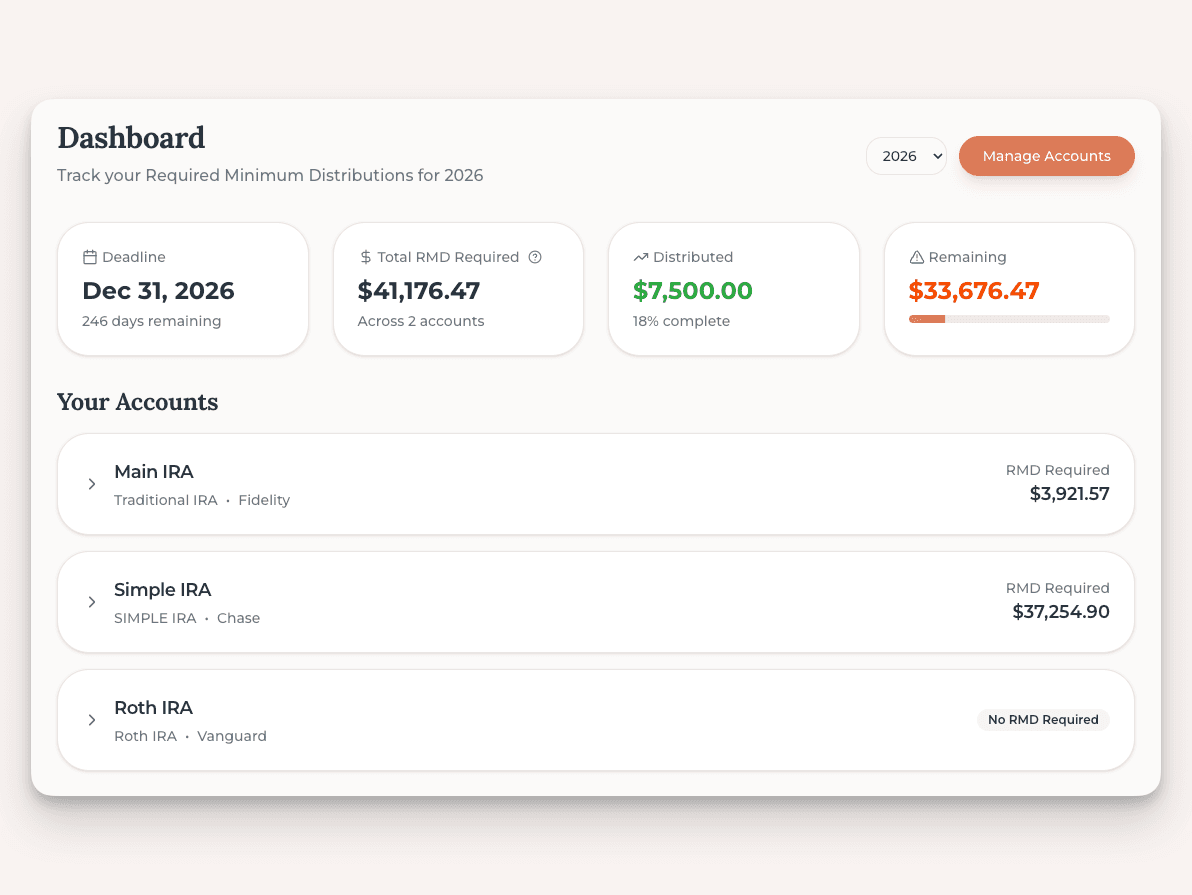
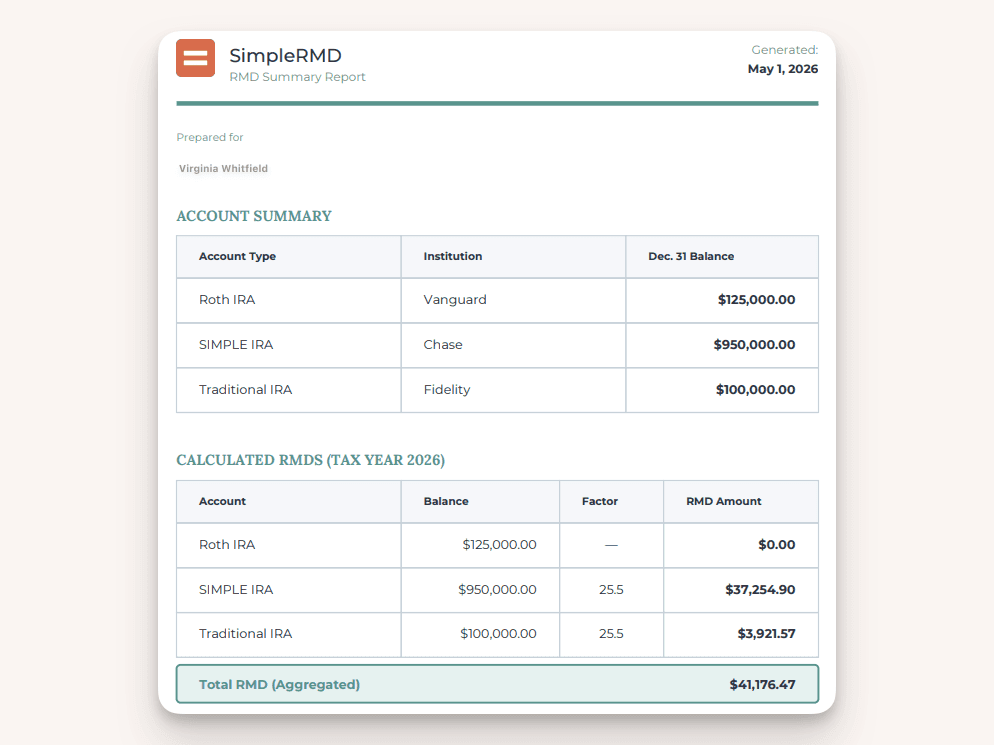
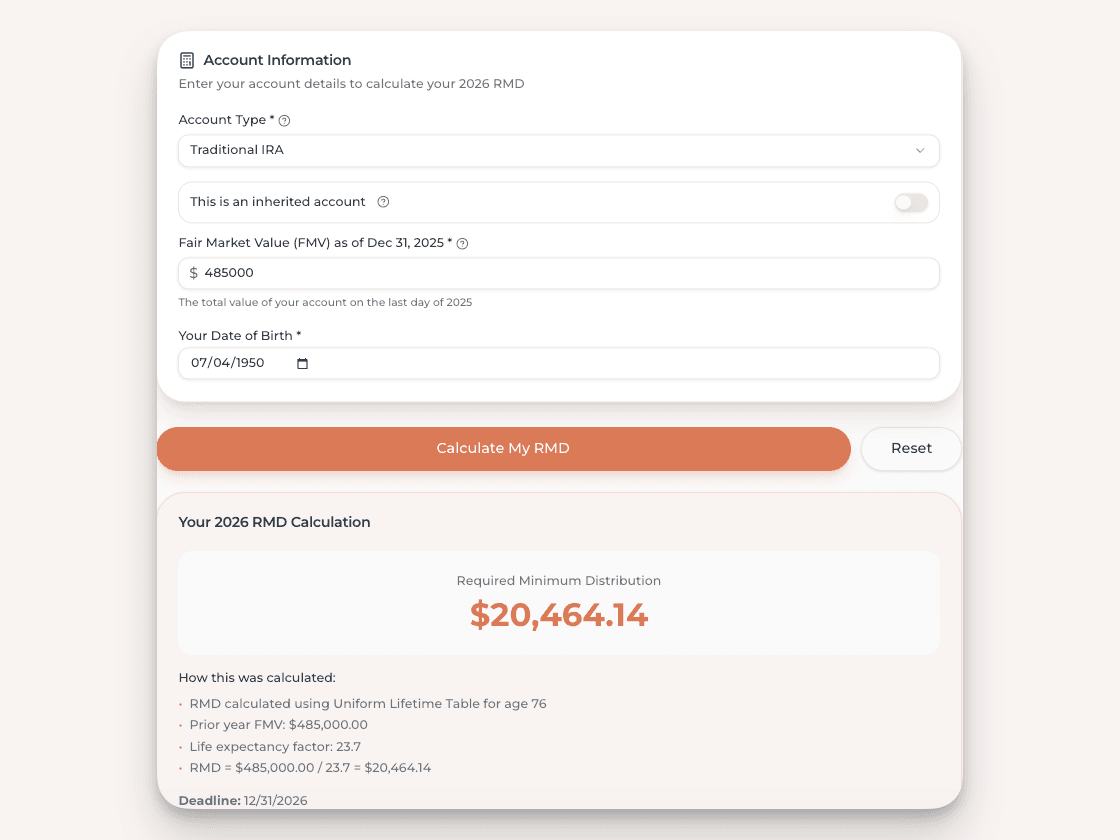
The cheaper path is never needing the waiver. Knowing your exact number and deadline is most of the battle — that is what the RMD overview covers, and how SimpleRMD works shows the tracking that makes a miss hard to repeat.
This article is for informational purposes only and does not constitute tax, legal, or financial advice. IRS rules and tax laws are subject to change. Consult a qualified tax professional or financial advisor for guidance specific to your situation. SimpleRMD is a calculation and tracking tool — not a financial advisory service.
Sources: IRS.gov (Form 5329 Instructions (2025), Retirement plan and IRA required minimum distributions FAQs, Correcting required minimum distribution failures). Rules confirmed current as of July 2026.