

The Required Beginning Date (RBD) is the deadline for an IRA owner's first Required Minimum Distribution. It falls on April 1 of the year following the calendar year the owner reaches RMD age. From the second RMD onward, distributions are due by December 31 each year.
In the inherited-IRA world, the RBD matters even more than the RMD age itself. Whether the original IRA owner died before or after their RBD changes the rules for every beneficiary who inherits — the deadline, the annual schedule, even which beneficiary categories qualify for which paths.
Try the Free Inherited IRA RMD CalculatorWhat the RBD is and when it falls
The RBD is April 1 of the year following the calendar year the IRA owner reaches RMD age. RMD age depends on birth year:
- Born before July 1, 1949: RMD age was 70½, RBD was April 1 after that
- Born July 1, 1949 through 1950: RMD age 72
- Born 1951 through 1959: RMD age 73 under SECURE 2.0
- Born 1960 or later: RMD age 75 under SECURE 2.0
An owner born in 1953 reached age 73 during 2026 and has an RBD of April 1, 2027 for the first RMD. The second RMD comes due December 31, 2027 — which means waiting until the April deadline doubles up two RMDs in one tax year.
Roth IRAs do not have an RBD during the original owner's lifetime. SECURE 2.0 removed the RBD for designated Roth accounts in 401(k) and 403(b) plans starting in 2024, putting designated Roths on the same lifetime-no-RMD footing as Roth IRAs.
Why RBD matters when the original owner dies
T.D. 10001 made the before-vs-after-RBD distinction central to inherited-IRA mechanics. Three rules pivot on it.
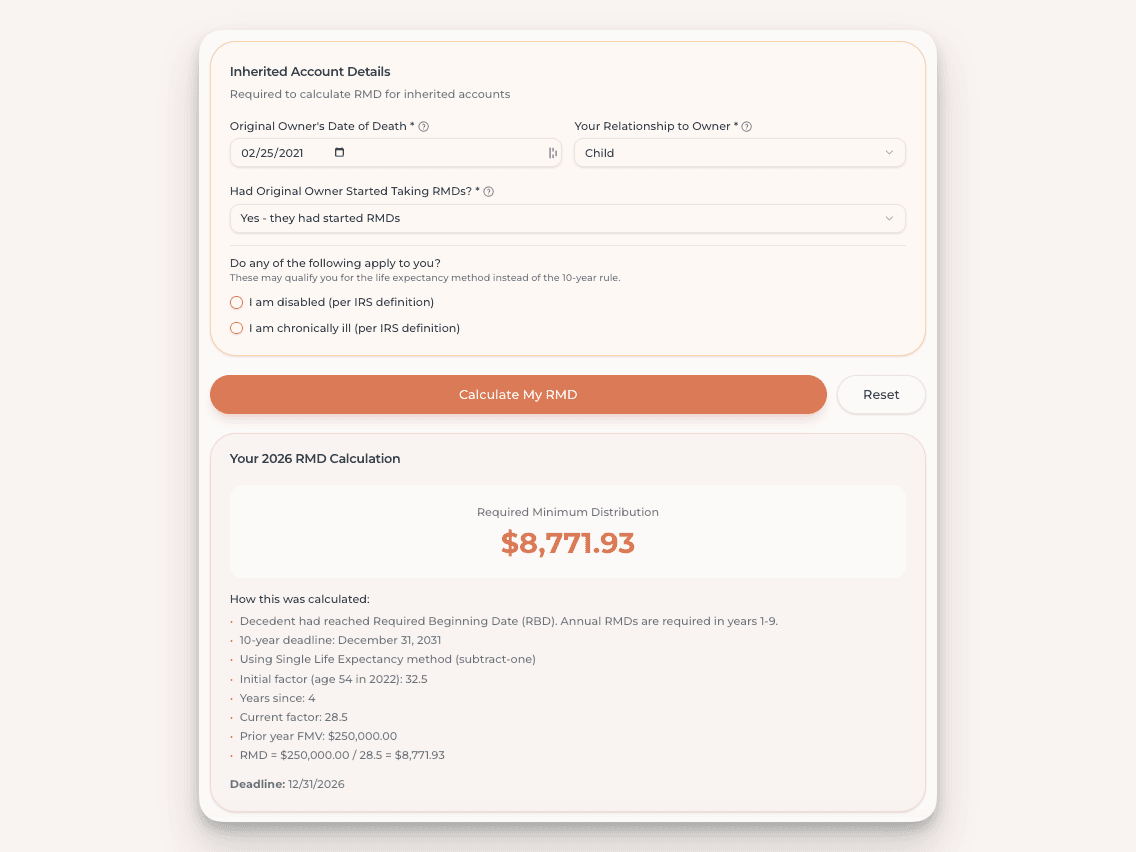
First, annual RMDs during the 10-year window. A non-eligible designated beneficiary inheriting from someone who died on or after RBD must take annual RMDs in years one through nine in addition to draining the account by year ten. If the owner died before RBD, no annual RMDs apply during the 10-year window.
Second, non-designated-beneficiary timing. An estate, charity, or non-see-through trust inheriting from someone who died before RBD uses the 5-year rule. If the owner died on or after RBD, the same beneficiaries use the deceased's remaining life expectancy from the IRS Single Life Table.
Third, year-of-death RMD. If the original owner had already reached RBD and died before taking that year's RMD, the beneficiary is responsible for taking the missed amount by December 31 of the year of death. If the owner died before RBD, no year-of-death RMD applies.
Finding the original owner's RBD
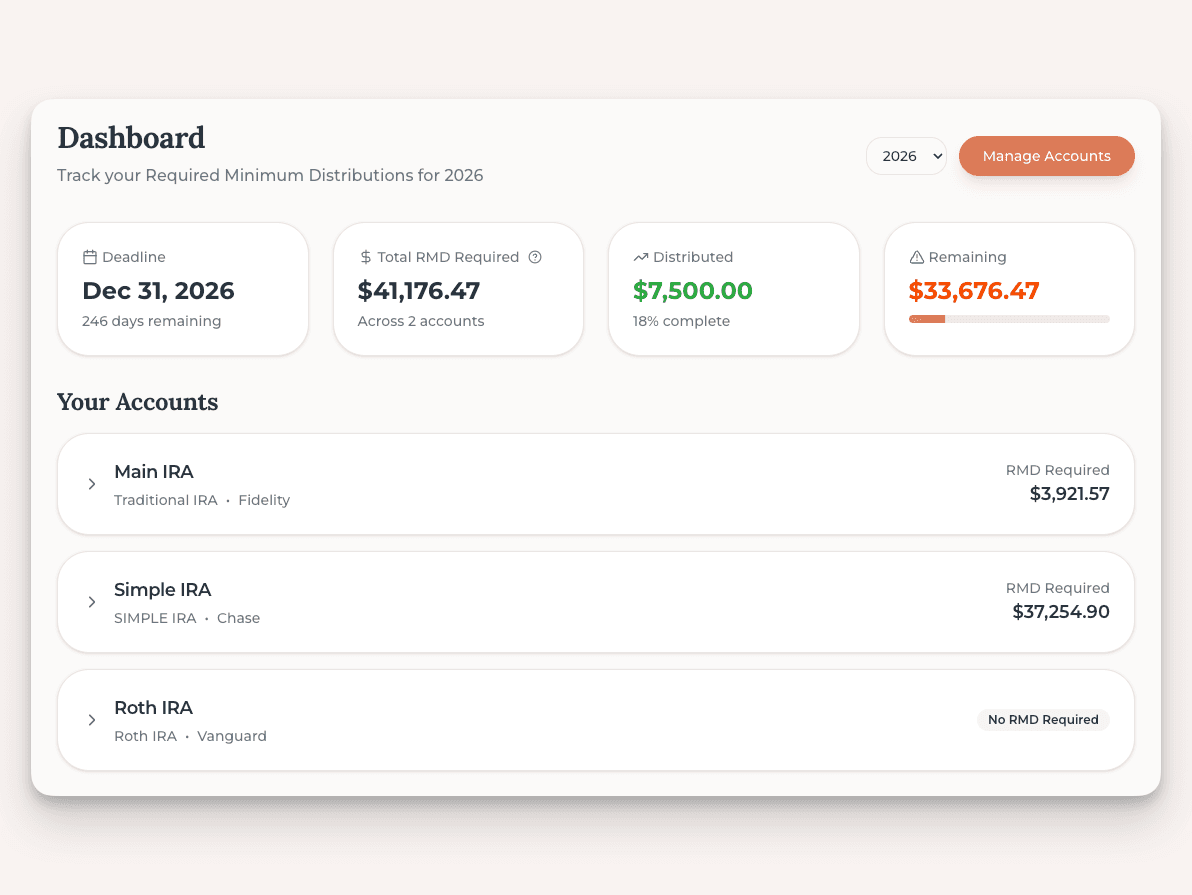
The original owner's birthdate and the date of death are the two pieces of information needed to know which inherited-IRA rule set applies. Both are usually on the death certificate, and the custodian's beneficiary-claim paperwork asks for them at intake.
An owner who turned 73 in 2025 reached their RBD on April 1, 2026. An owner who died in February 2026 at age 73 died before RBD, even if they intended to take their first RMD that year. An owner who died in October 2026 at age 73 died after RBD, and whether they had actually taken the 2026 RMD becomes the next question.
Owners born in 1960 or later who die before age 75 are necessarily pre-RBD, which puts inherited Traditional IRAs from those owners in the no-annual-RMD-during-10-years lane. Roth inherited IRAs are always in that lane because the original owner had no RBD.
For the broader inherited-IRA framework see the inherited-IRA pillar hub. The main RMD hub covers RMD rules across all account types. How It Works walks through what SimpleRMD does at each step. For the related question of when annual RMDs apply during the 10-year window, see the 10-year rule.
This article is for informational purposes only and does not constitute tax, legal, or financial advice. IRS rules and tax laws are subject to change. Consult a qualified tax professional or financial advisor for guidance specific to your situation. SimpleRMD is a calculation and tracking tool — not a financial advisory service.
Sources: IRS Final Regulations T.D. 10001 (July 2024). IRS.gov (Publication 590-B, "Beneficiaries"). IRS Notices 2022-53, 2023-54, 2024-35. SECURE Act of 2019 (Pub. L. 116-94). SECURE 2.0 Act of 2022 (Pub. L. 117-328). Rules confirmed current as of May 2026.