

No IRS rule puts an expiration date on claiming an inherited IRA. The beneficiary designation controls, and the account does not revert because you waited. What waiting actually costs you is options: two dates in the year after death lock in how favorable your treatment is, and the 10-year depletion clock starts on the death itself, whether you have retitled the account or not.
So the honest answer is: you cannot lose the money by moving slowly, but you can lose flexibility, and you can walk into penalties.
Calculate Your Inherited IRA RMDThe clock runs whether or not you act
For most non-spouse beneficiaries, the 10-year rule ends on December 31 of the tenth year after the year of death — a date fixed the moment the owner dies. Leaving the account unclaimed for four years does not pause it; it compresses the same taxable withdrawals into the six years that remain.
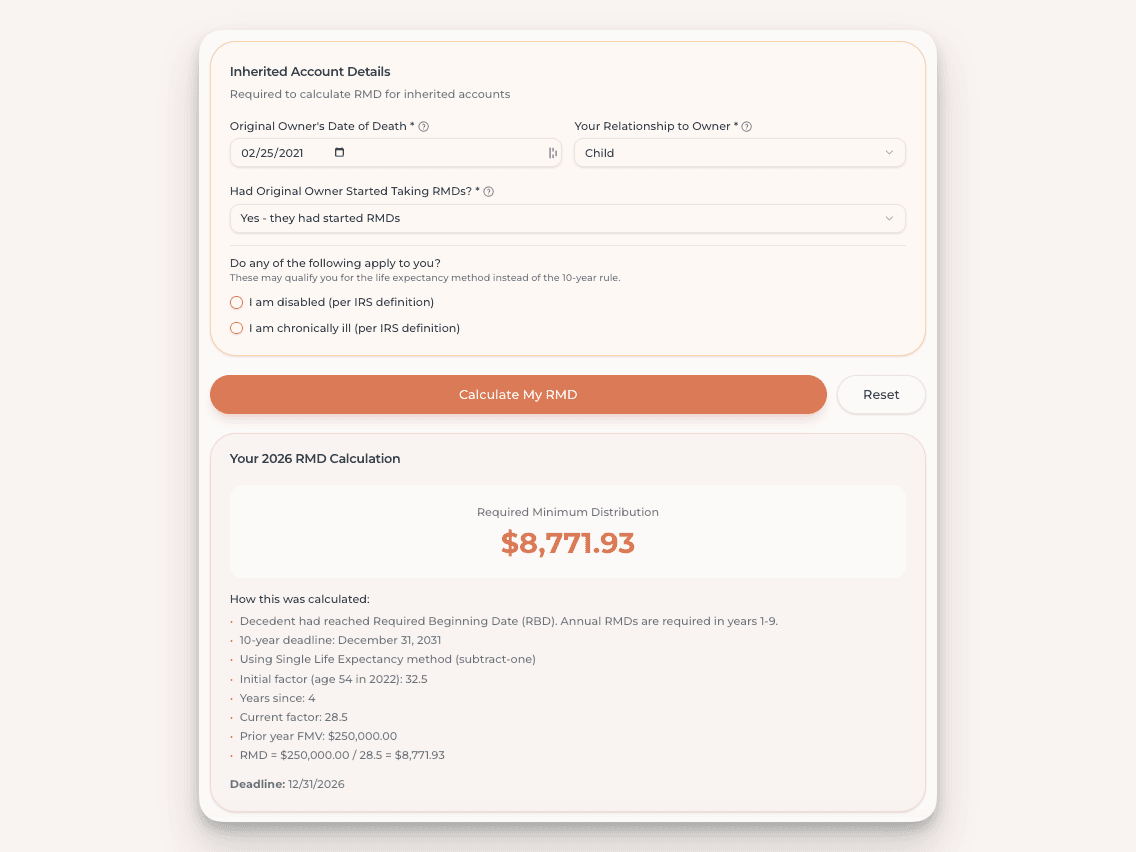
If the original owner had already reached their required beginning date, you also owe annual RMDs in years one through nine, starting December 31 of the year after death. An account nobody has retitled still accrues those requirements, and each missed year carries the 25% shortfall penalty. The mechanics are covered in how much do I have to withdraw from an inherited IRA.
The two dates that shape your options
September 30 of the year after death is the beneficiary determination date. Whoever remains a beneficiary on that date defines whose life expectancy governs the payout rules. A beneficiary who wants out — say, a charity whose share would spoil stretch treatment for the humans — must be cashed out or disclaim before then. Disclaimers have their own harder deadline: generally nine months from the date of death.
December 31 of the year after death is the separate-account deadline. Split the IRA among multiple beneficiaries by then and each person uses their own age and their own rules. Miss it, and everyone is stuck with the least favorable beneficiary's treatment. This is the deadline that makes "claiming" promptly worth it — the split has to be done by trustee-to-trustee transfer, which takes custodians time.
Two more timing traps worth knowing
If the owner died before taking that year's RMD, someone has to take it — and the deadline is more forgiving than most sources say. The 2024 final regulations and the year-of-death RMD deadline rules give beneficiaries until at least the end of the following year, with an automatic penalty waiver.
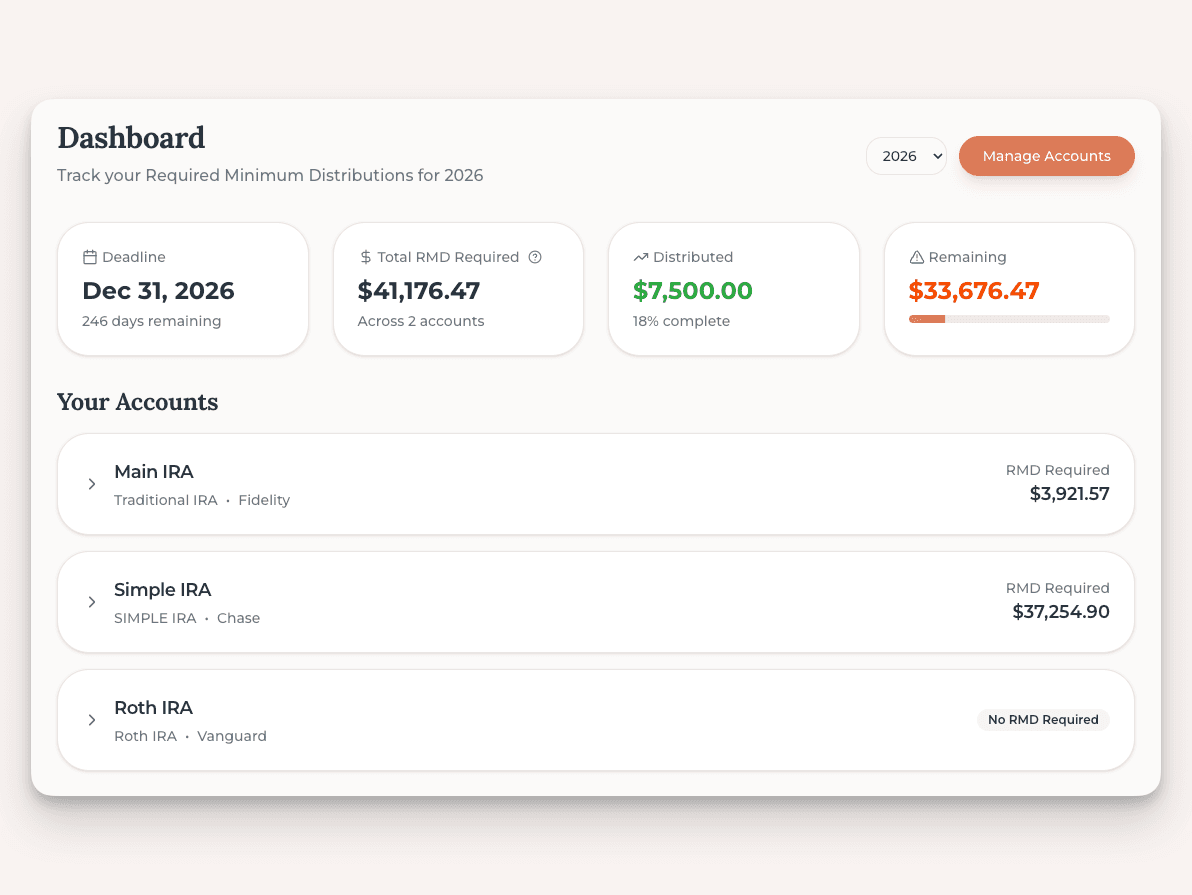
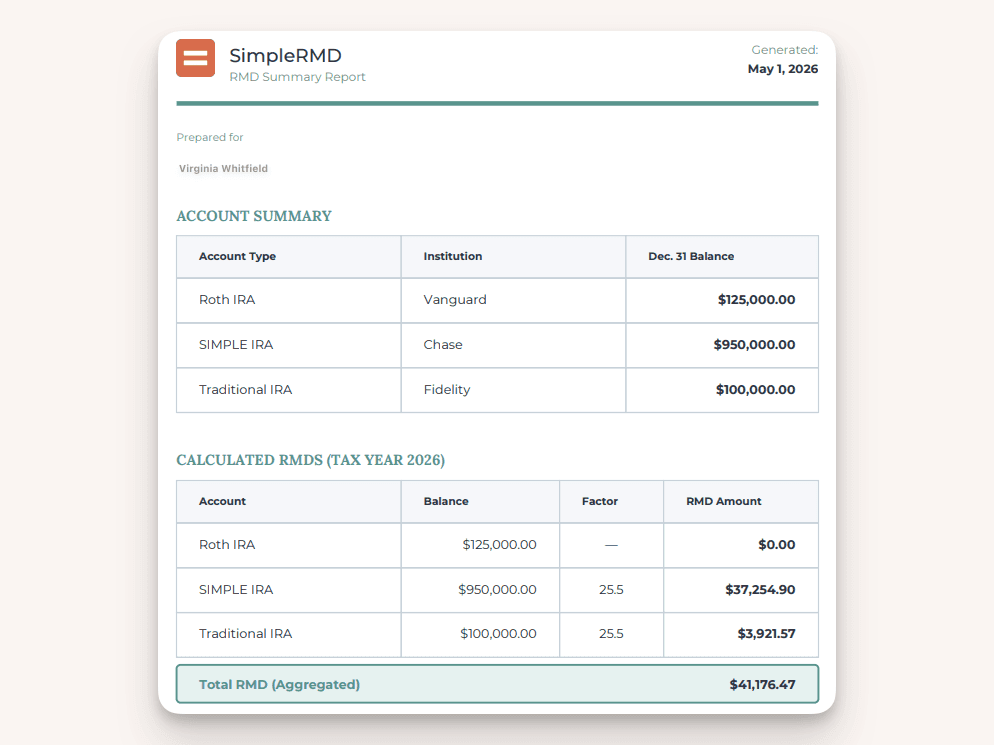
Spouses have the most room: a surviving spouse who is the sole beneficiary can generally elect to treat the IRA as their own at any time, so delay costs them the least. Everyone else should retitle promptly and get the schedule on paper. Start with the inherited IRA hub for the full rulebook, the RMD overview for the fundamentals, and how SimpleRMD works for tracking every date this page just gave you.
This article is for informational purposes only and does not constitute tax, legal, or financial advice. IRS rules and tax laws are subject to change. Consult a qualified tax professional or financial advisor for guidance specific to your situation. SimpleRMD is a calculation and tracking tool — not a financial advisory service.
Sources: IRS.gov (Publication 590-B, Required minimum distributions for IRA beneficiaries, Retirement topics — beneficiary). Rules confirmed current as of July 2026.