

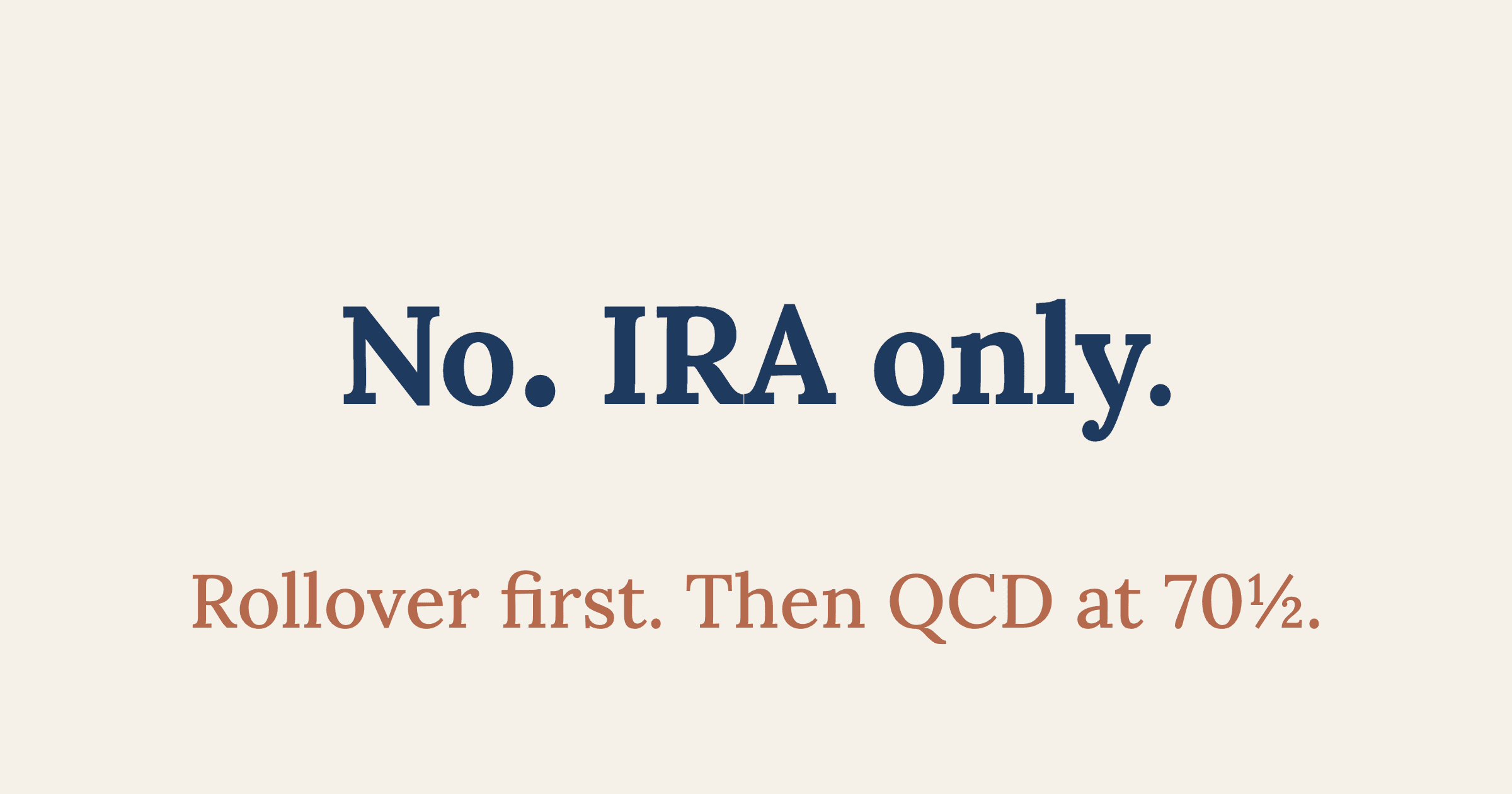
No. A Qualified Charitable Distribution (QCD) can only be made from an Individual Retirement Account — Traditional, Rollover, or Inherited. SEP IRAs and SIMPLE IRAs also qualify, but only if they are "inactive" for the year (no ongoing employer contributions). 401(k), 403(b), governmental 457(b), and TSP accounts are not eligible. The rule comes from IRC §408(d)(8), which scopes the QCD provision specifically to IRAs.
The workaround is to roll the 401(k) funds into a Traditional IRA first, then make the QCD from the IRA. The rollover itself isn't taxable, and once the funds are in the IRA, the standard QCD rules apply.
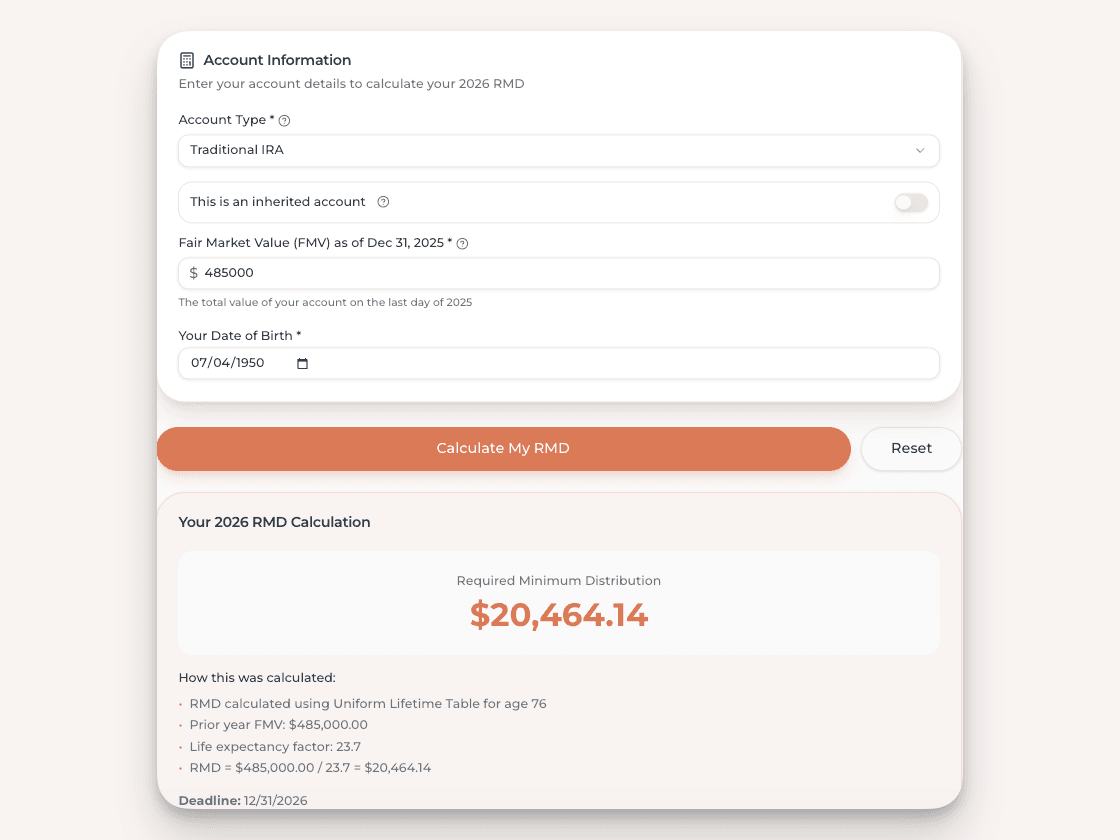
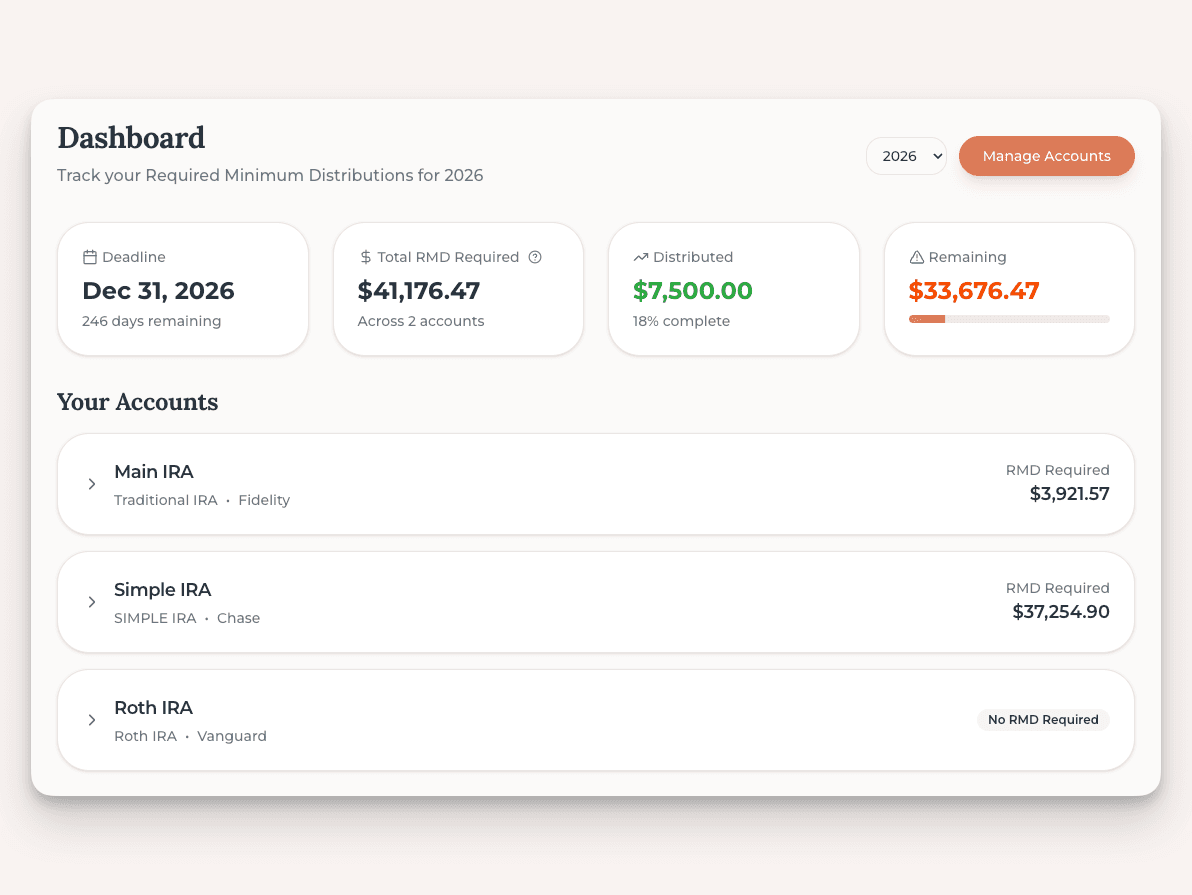
Calculate Your RMDWhy the rule exists
The QCD provision was originally created in 2006 as a way to let retirees give to charity directly from their IRAs without the distribution counting as taxable income. Congress scoped the provision narrowly to IRAs because IRAs are individually held — there's a single account owner who can direct the distribution to a specific charity in a clean transaction.
Employer plans are more complex. A 401(k) or 403(b) is held under a plan document, has a plan administrator, and involves the participant's relationship with the plan rather than direct ownership of the account. Extending QCD rules to those accounts would require plan-level operational changes that Congress declined to mandate.
SECURE 2.0 made several QCD changes in 2022 — indexing the annual limit for inflation, allowing a one-time $50,000 transfer to a charitable gift annuity or charitable remainder trust — but it did not extend QCDs to 401(k) or other employer plans. As of 2026, the IRA-only rule still holds.
The IRA-rollover workaround
If you want to use 401(k) funds for a charitable distribution, the path is a two-step process. Roll the 401(k) into a Traditional IRA first, then make the QCD from the IRA.
The rollover is generally not a taxable event if done as a direct rollover (custodian-to-custodian). The funds move from the 401(k) plan to the IRA without passing through your hands, and no withholding applies. Once the funds are in the IRA, you can make a QCD at any time, subject to the same rules that apply to any IRA QCD: you must be 70½ or older, the distribution must go directly from the IRA custodian to a qualifying 501(c)(3) charity, and the 2026 annual limit is $111,000 per individual.
A timing nuance worth flagging. If you are 73 or older and have an RMD due from the 401(k), you must take that RMD before rolling the rest to the IRA. The RMD itself cannot be rolled over — it must be distributed to you (or, in the workaround context, distributed as a regular taxable withdrawal). Only the post-RMD balance is eligible for rollover. For the broader rules on 401(k) RMDs including aggregation and rollover sequencing, see 401(k) RMD rules.
What still doesn't work after the rollover
A few rules survive the rollover. The QCD itself must still come from an IRA, not from the 401(k). The rollover converts 401(k) funds into IRA funds; it doesn't make a charitable distribution from the 401(k).
The QCD age threshold is 70½, not 73. This is older than the current RMD-start age, so beneficiaries who are 70½ to 72 can make a QCD even before their RMDs are required to begin. Once RMDs begin at 73, the QCD can count toward satisfying the annual RMD if it comes from an IRA the RMD is being calculated against.
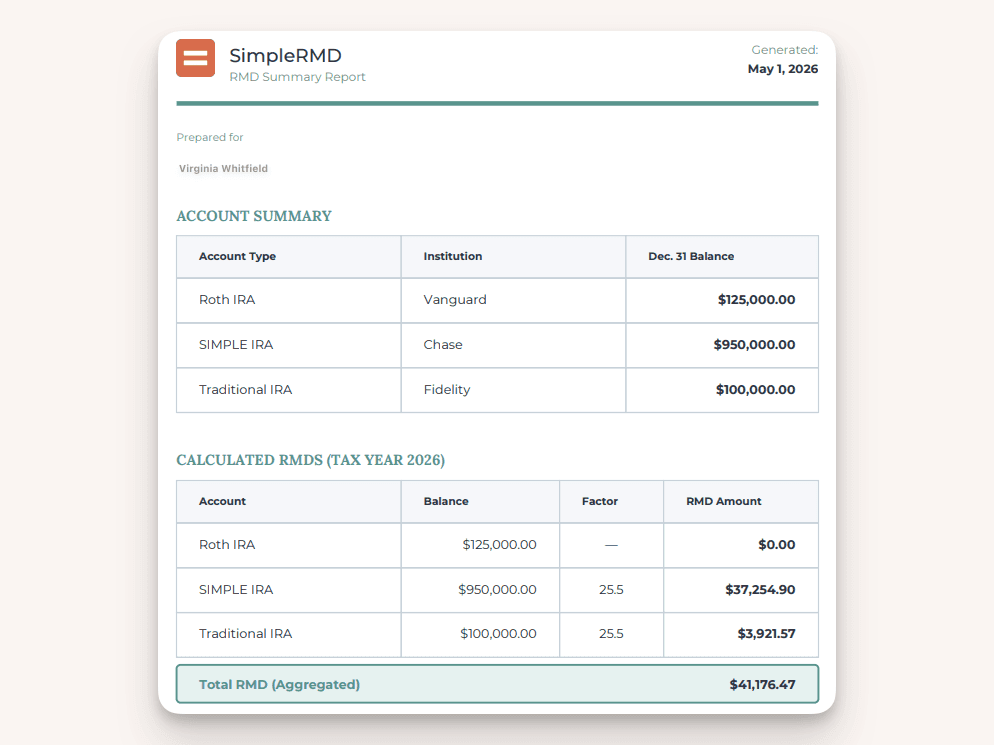
Donor-advised funds, private foundations, and supporting organizations are not eligible QCD recipients, even after the rollover-to-IRA path. The eligibility list is identical: the recipient must be a public 501(c)(3) charity. For QCD documentation requirements, see What your QCD acknowledgement letter must contain. For the reporting walkthrough on your return, see How to report a QCD on your tax return. How SimpleRMD works explains what the calculator and tracking tools cover across account types.
This article is for informational purposes only and does not constitute tax, legal, or financial advice. IRS rules and tax laws are subject to change. Consult a qualified tax professional or financial advisor for guidance specific to your situation. SimpleRMD is a calculation and tracking tool — not a financial advisory service.
Sources: IRS.gov (Publication 590-B, Retirement Plans FAQs regarding IRAs Distributions, Rollovers of retirement plan and IRA distributions). IRC §408(d)(8). SECURE 2.0 Act of 2022 (Pub. L. 117-328), Section 307. Rules confirmed current as of May 2026.