

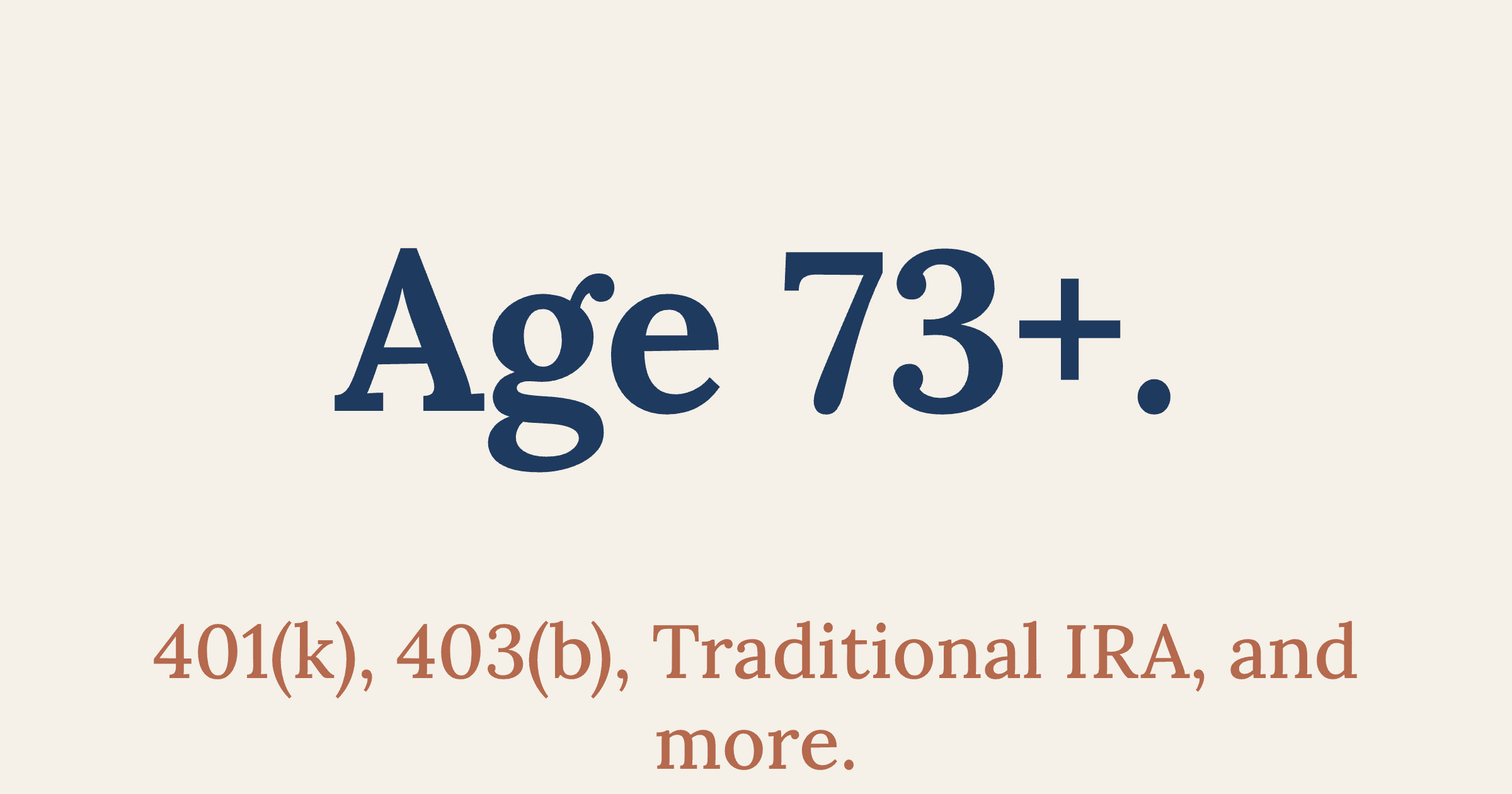
Mandatory retirement withdrawal rules require anyone 73 or older with a tax-deferred retirement account to take a minimum distribution each year — officially called a Required Minimum Distribution (RMD). The IRS calculates a minimum amount based on your account balance and age. Missing the December 31 deadline triggers a 25% excise tax on the shortfall.
Calculate My Mandatory Withdrawal FreeWhich accounts have mandatory withdrawals
Not all retirement accounts require mandatory withdrawals. The rule applies to tax-deferred accounts — where contributions went in pre-tax and growth hasn't been taxed yet.
Accounts with mandatory withdrawals:
- Traditional IRAs
- SEP-IRAs and SIMPLE IRAs
- 401(k), 403(b), and 457(b) plans
Accounts without mandatory withdrawals:
- Roth IRAs (no withdrawals required during your lifetime)
- Roth 401(k)s (RMD-free since 2024 under SECURE 2.0)
If you inherited any retirement account, mandatory withdrawal rules apply regardless of your age. See inherited IRA rules.
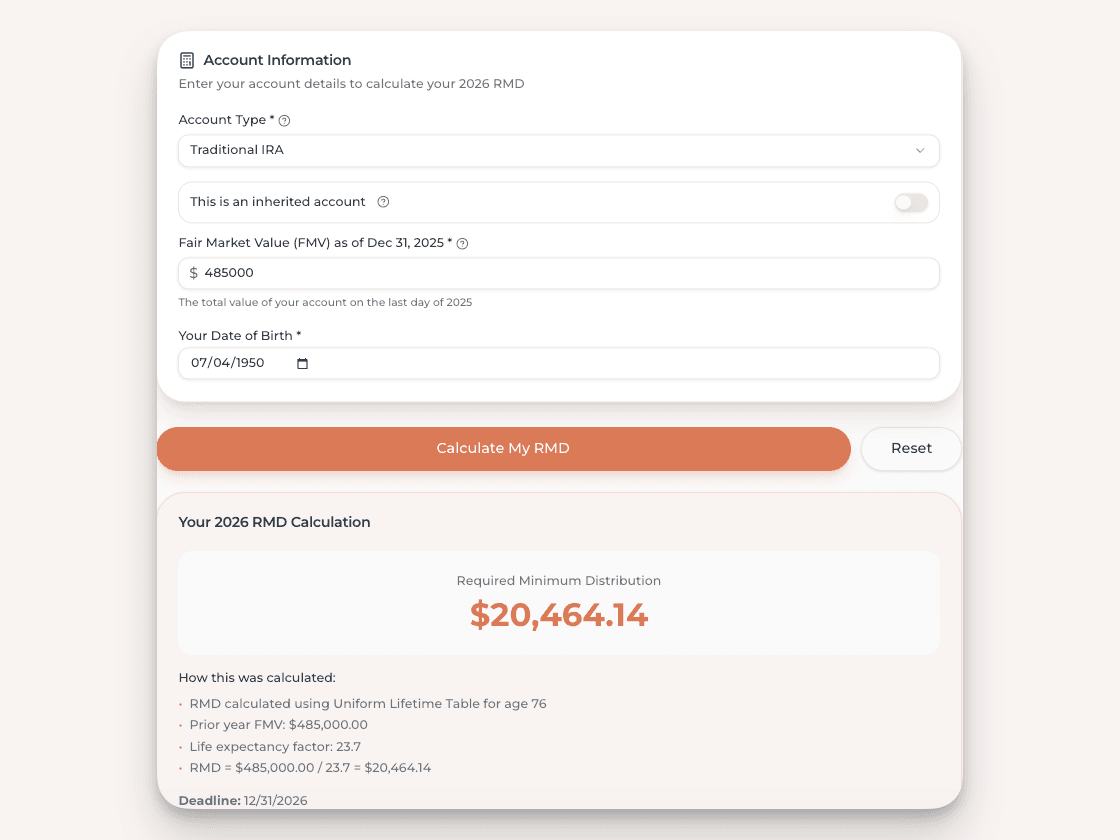
How the required amount is calculated
Your mandatory withdrawal amount is recalculated every year. It's based on your prior year-end account balance and an IRS life expectancy factor that corresponds to your age.
As you get older, the factor decreases — which means a higher percentage of your account must come out each year.
The deadline for most people is December 31. Your first mandatory withdrawal has a one-time extension to April 1 of the following year — but taking it late means two taxable withdrawals in the same calendar year. See first-year RMD rules.
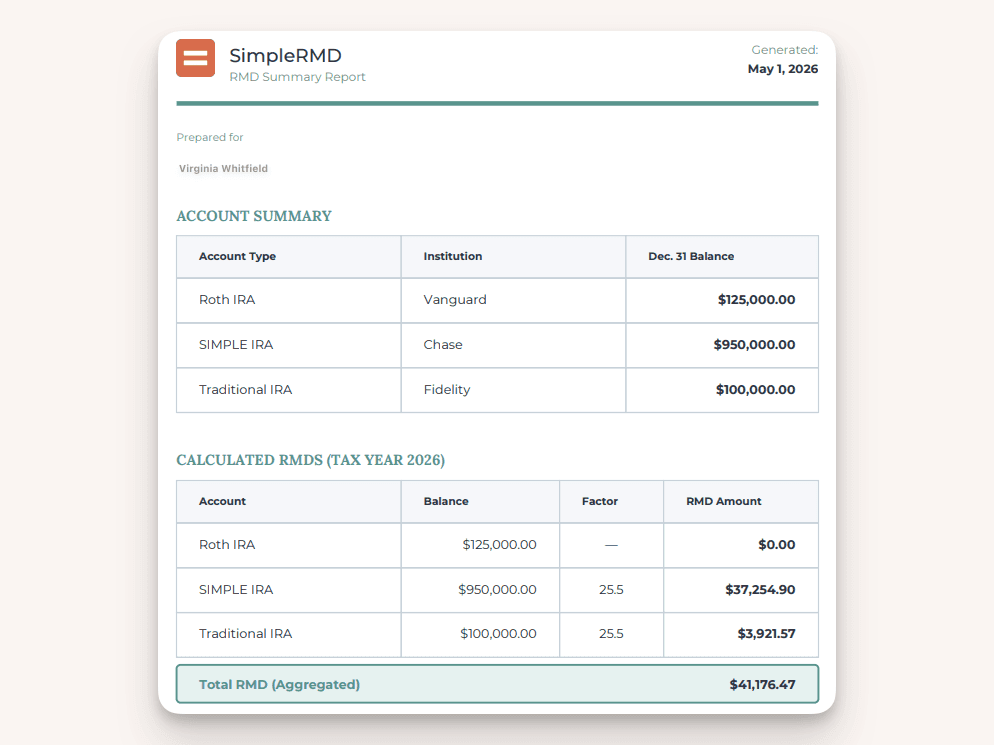
Track every account. Miss nothing.
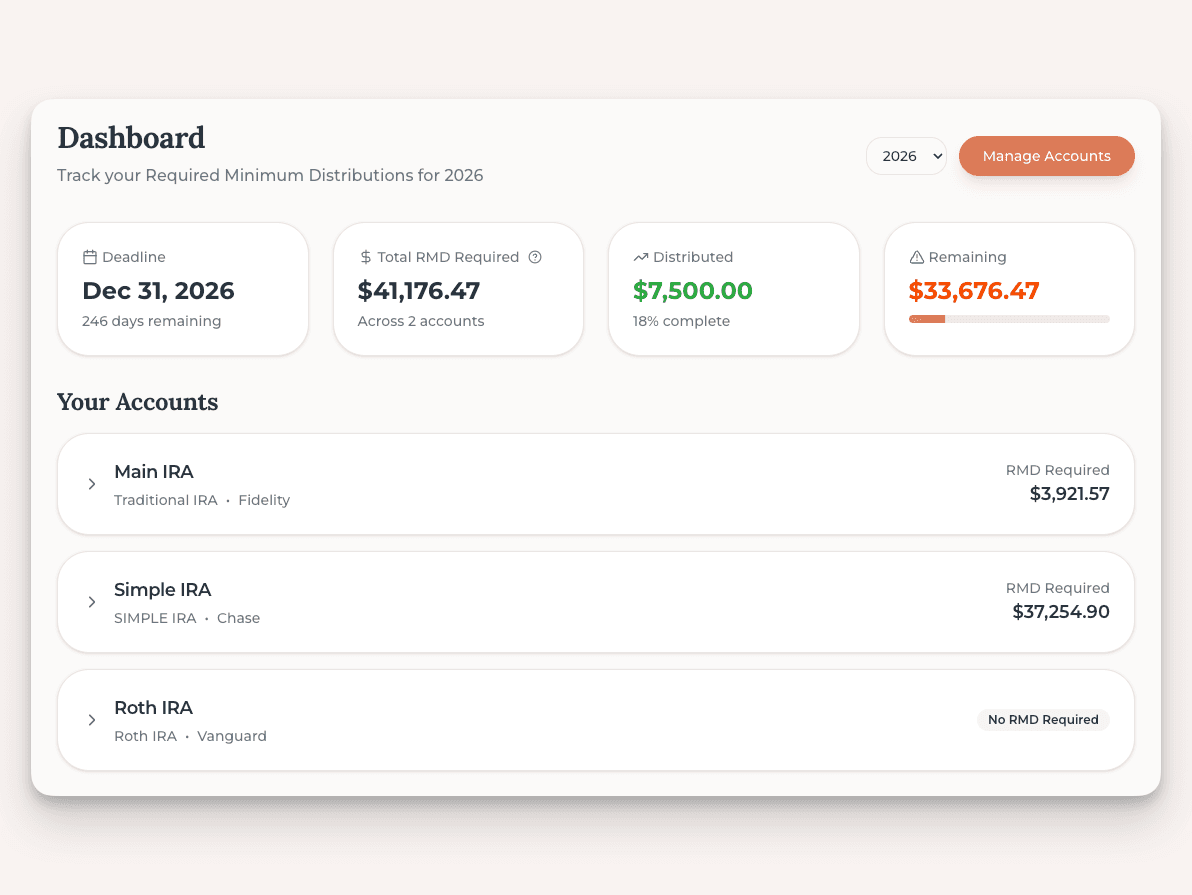
If you have retirement accounts at multiple brokerages, each requires its own mandatory withdrawal calculation. SimpleRMD tracks them all in one place.
Calculate for free, then save your inputs so next year takes seconds instead of hours. Export a clean summary for your CPA when tax season arrives.
- Free calculator — no signup required
- Paid plan: multi-account tracking, saved inputs, PDF export, November deadline reminders
This article is for informational purposes only and does not constitute tax, legal, or financial advice. IRS rules and tax laws are subject to change. Consult a qualified tax professional or financial advisor for guidance specific to your situation. SimpleRMD is a calculation and tracking tool — not a financial advisory service.