

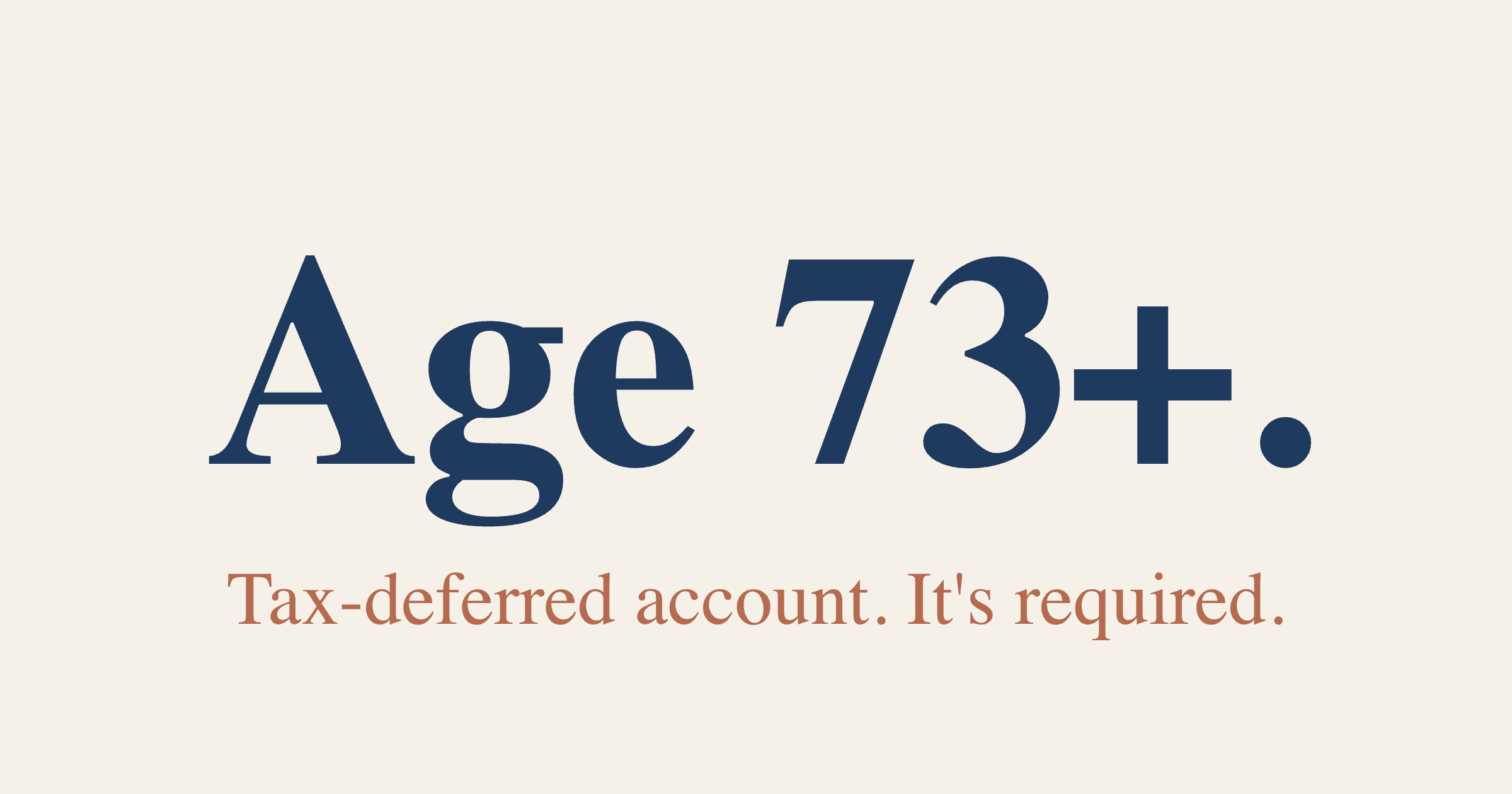
If you are 73 or older and own a Traditional IRA, 401(k), SEP-IRA, or similar tax-deferred retirement account, you are required to take a Required Minimum Distribution (RMD) each year. Missing it triggers a 25% IRS penalty on whatever you should have withdrawn.
Try the Free RMD CalculatorThe basic rule: age 73 and a tax-deferred account
RMDs are required once you reach age 73. This applies if you were born in 1951 or later. If you were born in 1959 or earlier, your start age was 72 under old rules — but SECURE 2.0 raised it to 73.
You must take your first RMD by April 1 of the year after you turn 73. Every year after that, the deadline is December 31.
- Age 73 or older: RMDs required
- Age 75 or older (born 1960+): same rules, same deadline
- Still working at 73: a limited exception applies to your current employer's 401(k) only — not IRAs
Which accounts require RMDs
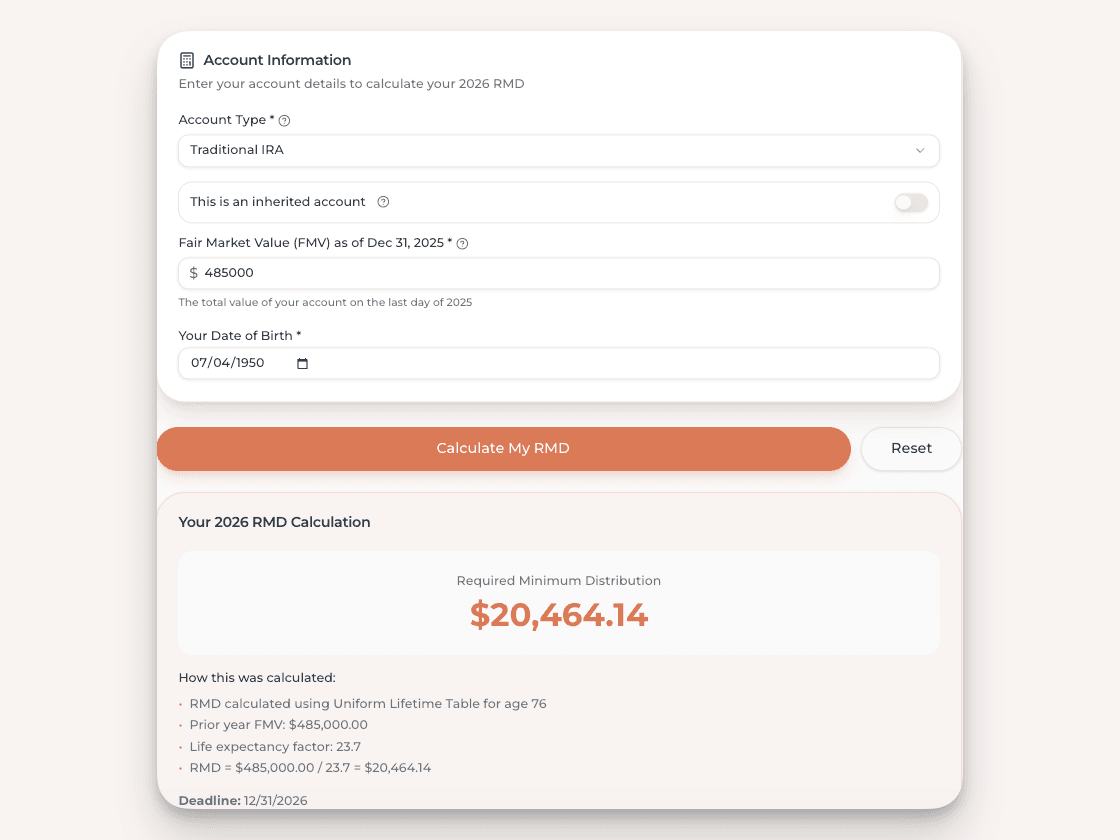
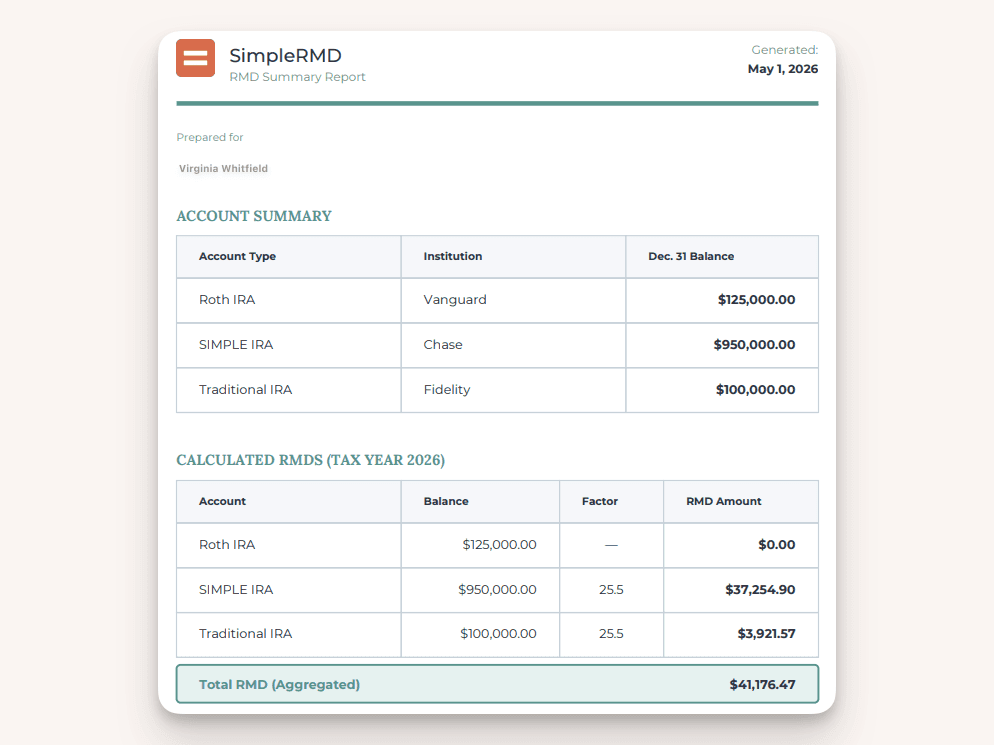
Most tax-deferred retirement accounts are subject to RMDs. The balance in each qualifying account on December 31 of the prior year determines how much you must withdraw.
Accounts that require RMDs:
- Traditional IRAs
- SEP-IRAs and SIMPLE IRAs
- 401(k), 403(b), and 457(b) plans
Accounts that do not:
- Roth IRAs (no RMDs during your lifetime)
- Roth 401(k)s (RMD-free starting in 2024 under SECURE 2.0)
Inherited IRAs follow a separate set of rules regardless of your age. See the inherited IRA RMD rules.
How the amount is calculated
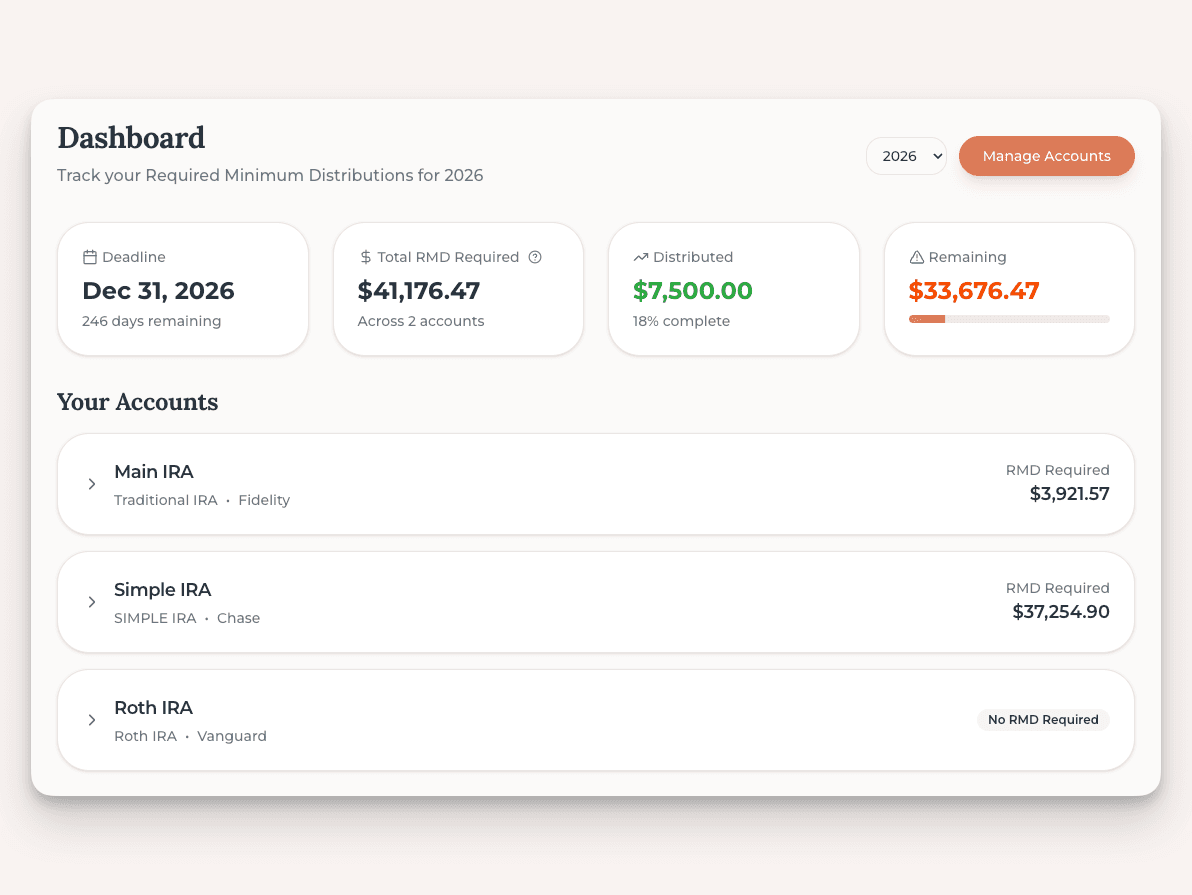
Your RMD is not a fixed amount. It's recalculated every year based on two numbers: your prior year-end account balance and an IRS life expectancy factor tied to your age.
The older you get, the higher your required percentage — because the IRS expects a shorter remaining distribution period.
The calculation uses the IRS Uniform Lifetime Table for most account owners. A different table applies if your sole beneficiary is a spouse more than 10 years younger.
SimpleRMD runs this calculation automatically — enter your balance and age, and you'll have your number in seconds. Free, no signup required.
This article is for informational purposes only and does not constitute tax, legal, or financial advice. IRS rules and tax laws are subject to change. Consult a qualified tax professional or financial advisor for guidance specific to your situation. SimpleRMD is a calculation and tracking tool — not a financial advisory service.