

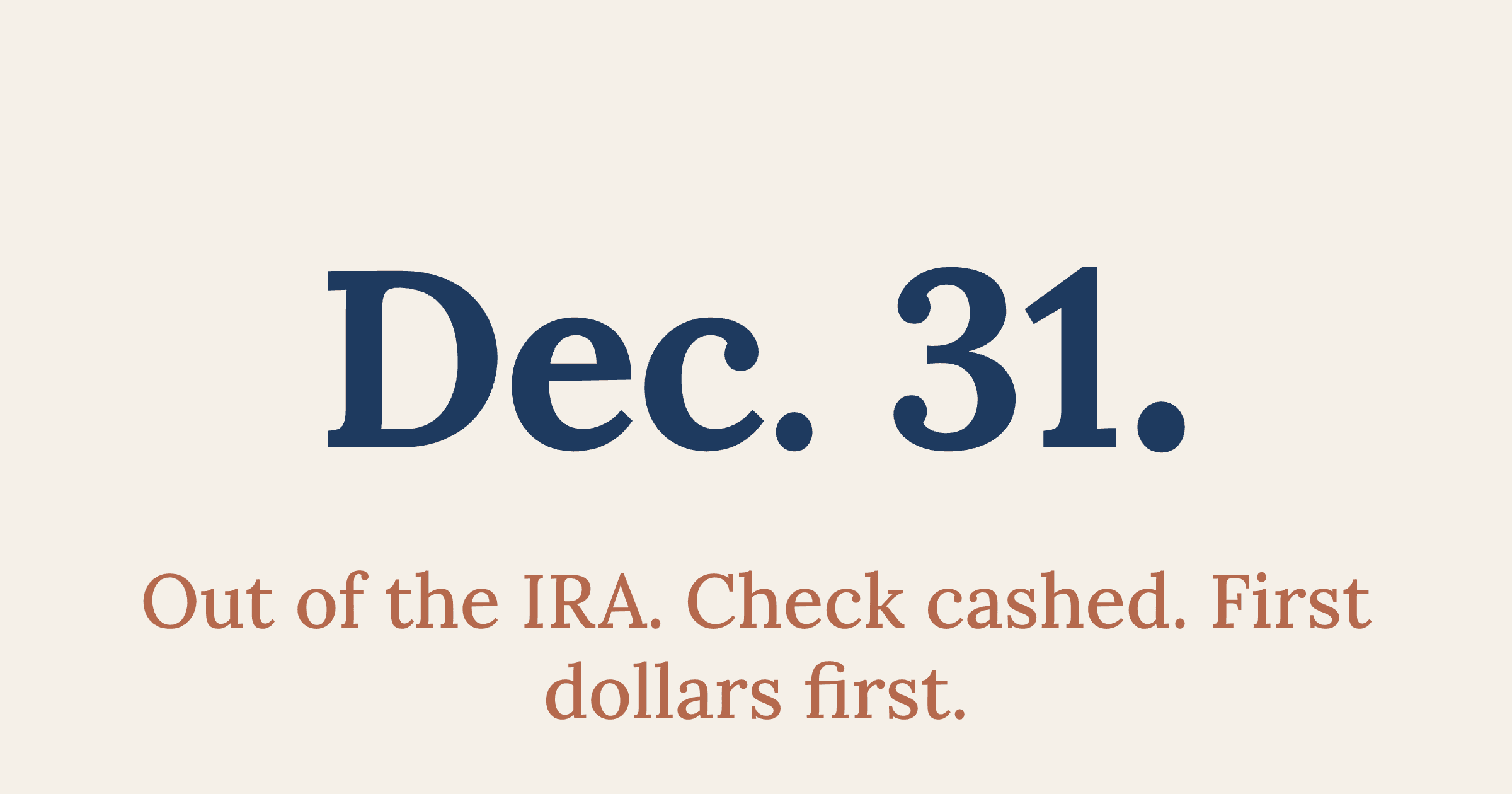
A qualified charitable distribution counts for the year the money actually leaves your IRA — so the working deadline is December 31, and the money has to be out of the account by then, not merely requested. There is no extension, no grace period into the filing season, and no way to designate a January distribution as last year's QCD.
Two timing rules inside that deadline catch people every December: checks that have not cleared, and QCDs taken after the RMD is already satisfied.
Calculate Your RMDThe December 31 rule, and the checkbook trap
When your custodian sends the funds directly to the charity, the distribution is dated when it leaves the account. Submit the request with enough runway for processing — custodians get buried in December, and a request submitted the last week of the year can slip into January, becoming next year's distribution.
The sharper trap is IRA checkwriting. If you write a check to a charity from an IRA checkbook, the money does not leave the IRA until the charity deposits it and the check clears. A check mailed December 28 and cashed January 6 is a January distribution. If you use IRA checks for giving, treat Thanksgiving as your practical deadline and confirm the charity has deposited before year-end.
The age gate is day-level too: you must actually be 70½ on the date of the distribution. Turning 70½ in November means no QCD in October of that same year.
Order matters: make the QCD your first dollars out
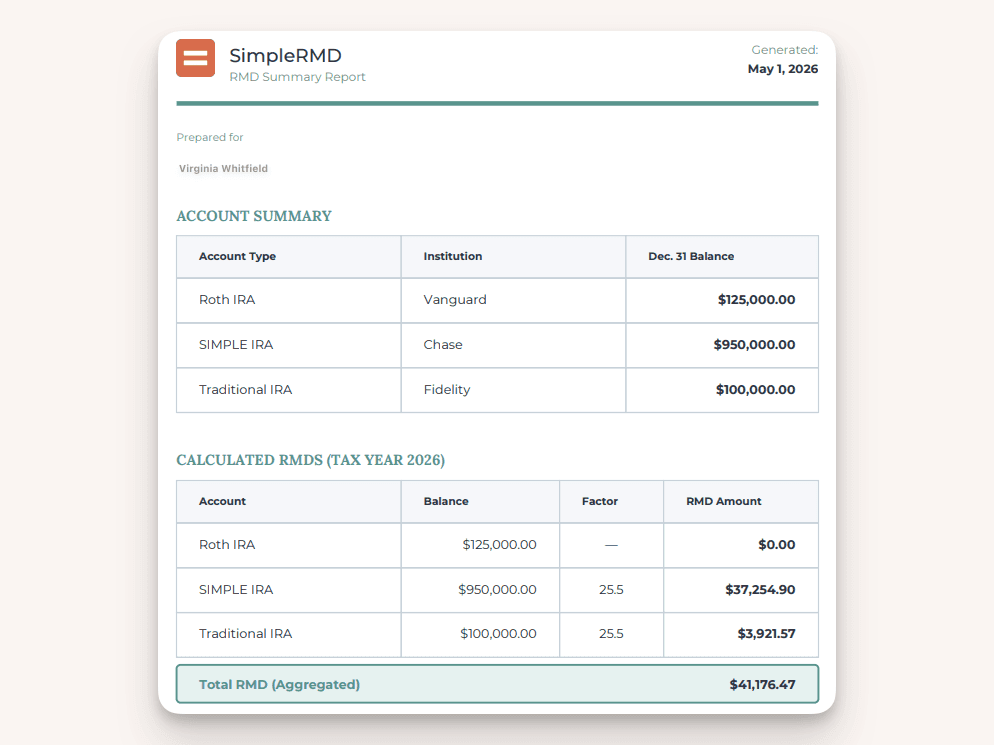
The first dollars out of your IRA each year count toward your RMD, and once your RMD is satisfied, later distributions cannot retroactively become the RMD. Take your full RMD in February and give through a QCD in November, and the QCD is still tax-free — but it did nothing to offset the RMD income you already recognized.
So the sequencing rule is simple: if the point of the QCD is to cover some or all of your RMD, make it the first distribution of the year, or at least complete it before taking the rest of your RMD. The annual QCD cap is $111,000 per person for 2026 (up from $108,000 in 2025), indexed each year — far above the typical RMD, so the cap is rarely the constraint. Timing is.
After the deadline: paperwork with its own clocks
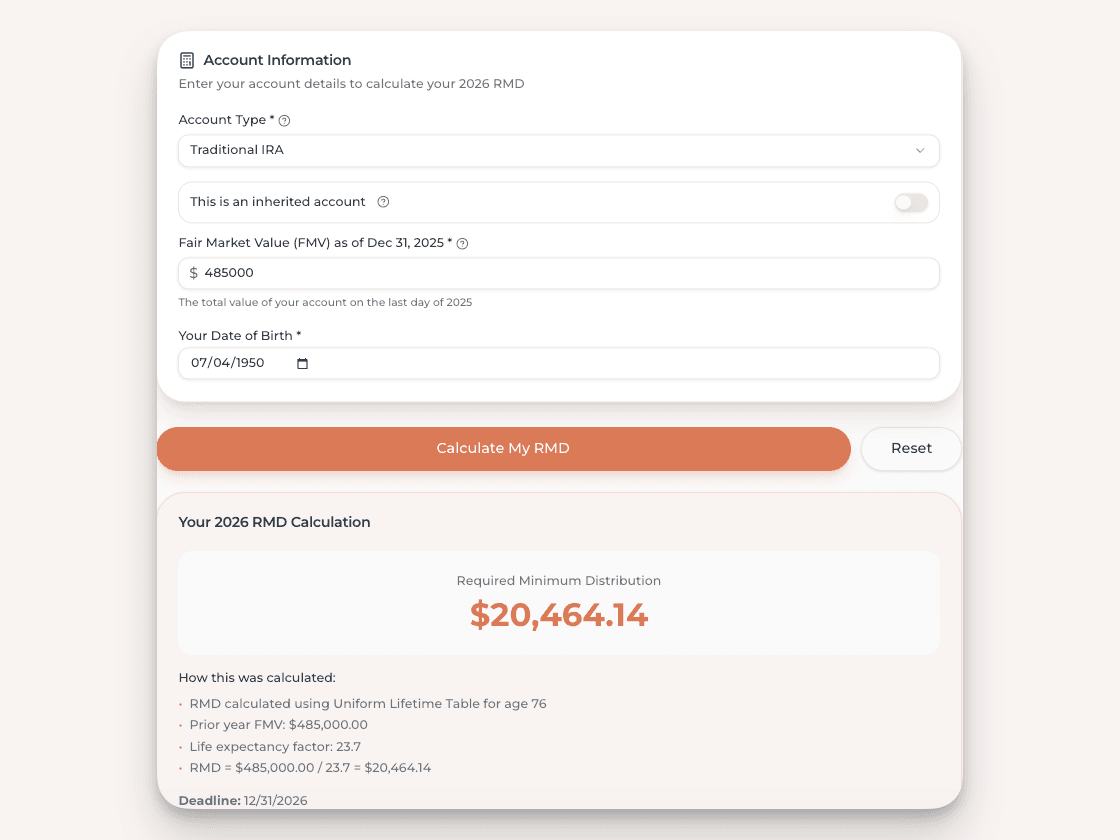
Your 1099-R will report the QCD as an ordinary distribution — the exclusion happens on your 1040, and you need a written acknowledgement from the charity before you file. Both pieces have their own mechanics: see how to report a QCD on your tax return and the QCD acknowledgement letter requirements.
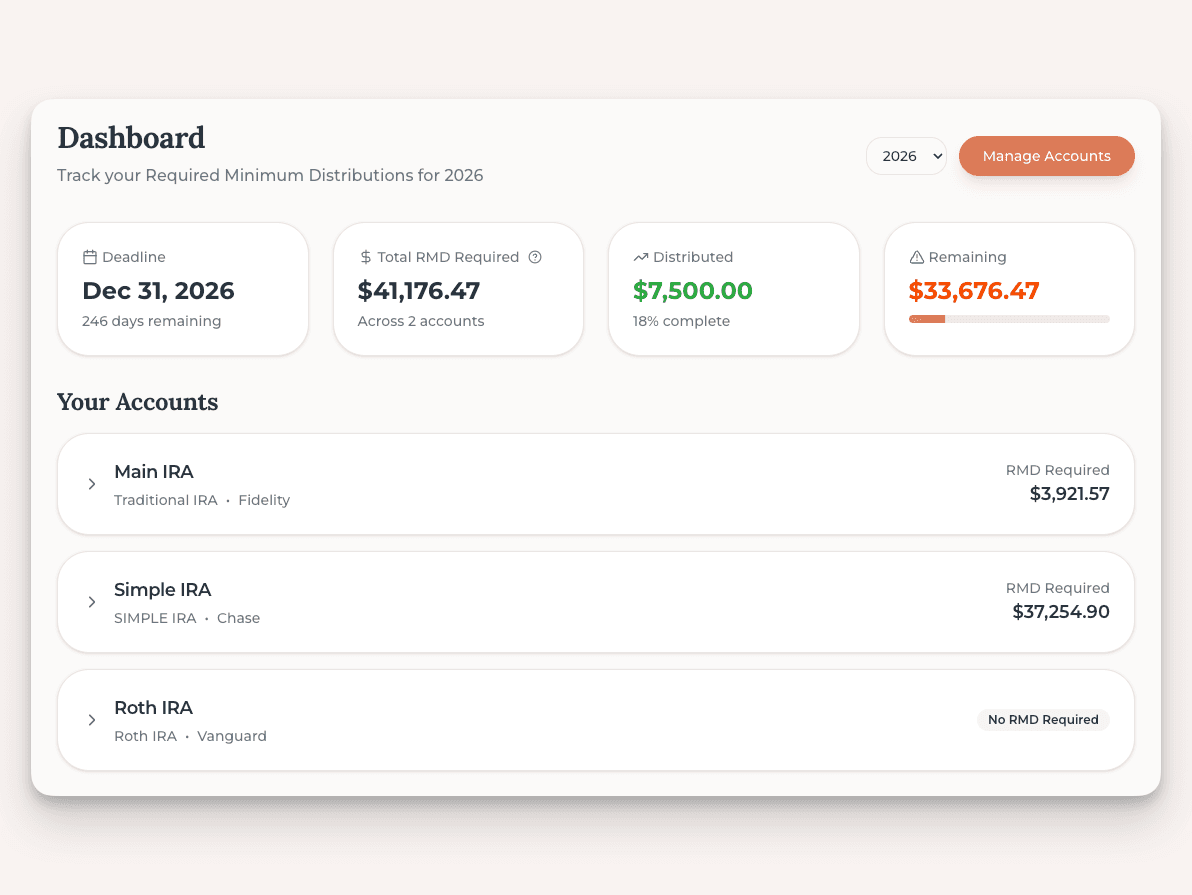
QCDs come only from IRAs — the workaround for workplace plans is covered in can you make a QCD from a 401(k). For how the distribution fits your broader tax picture, start at the RMD taxes hub, the RMD overview, or how SimpleRMD works.
This article is for informational purposes only and does not constitute tax, legal, or financial advice. IRS rules and tax laws are subject to change. Consult a qualified tax professional or financial advisor for guidance specific to your situation. SimpleRMD is a calculation and tracking tool — not a financial advisory service.
Sources: IRS.gov (Publication 590-B, Retirement plan and IRA required minimum distributions FAQs, COLA increases for dollar limitations on benefits and contributions). Rules confirmed current as of July 2026.